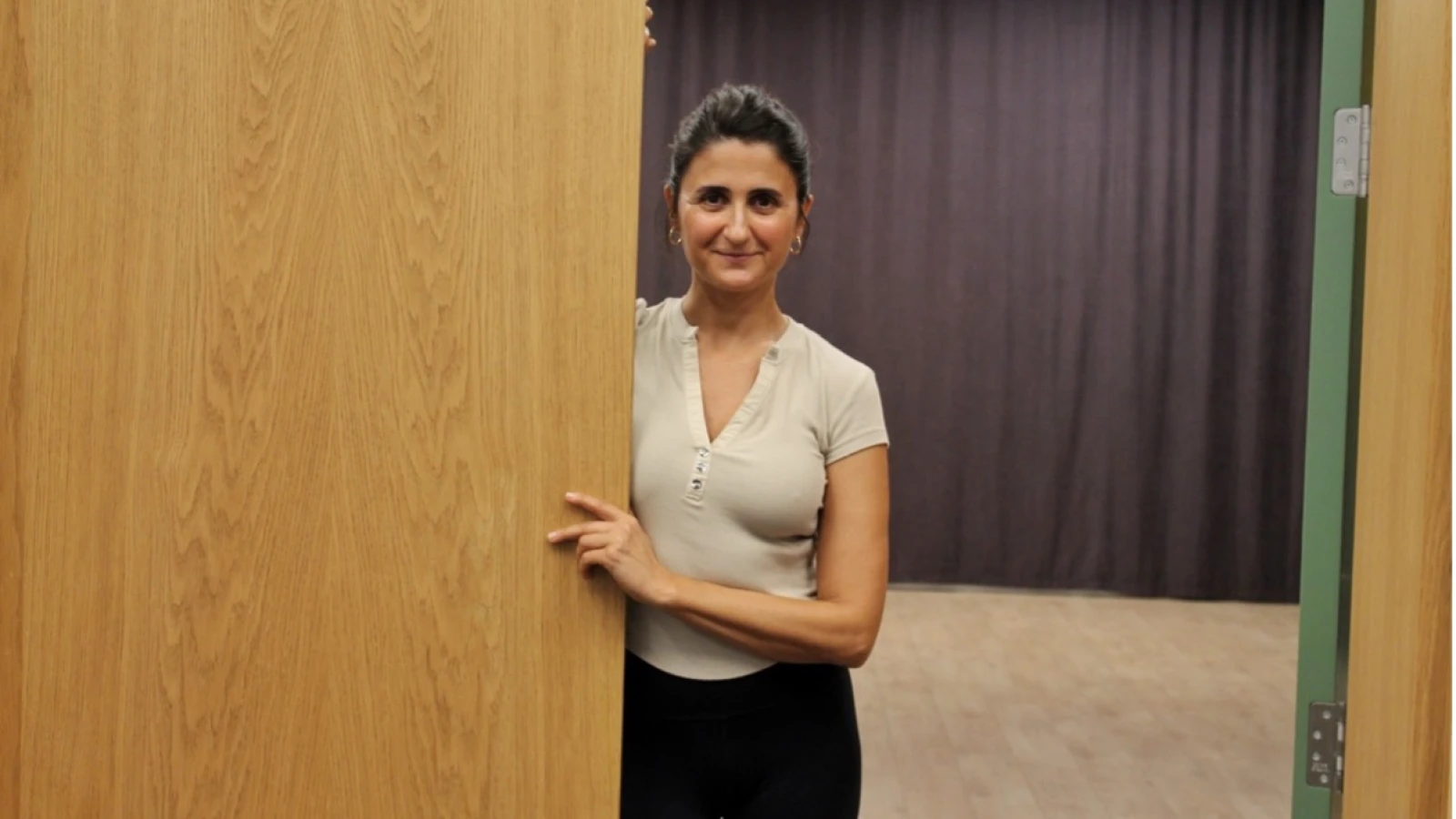
Sometimes the sounds of life grow so loud that we miss the melody within us. At times like these, we need voices that remind us to slow down, listen, and reconnect with our true selves. Duygu Özay is one of those voices… Her music and yoga practice, like the calm yet steady flow of a river, invite us on a journey inward.
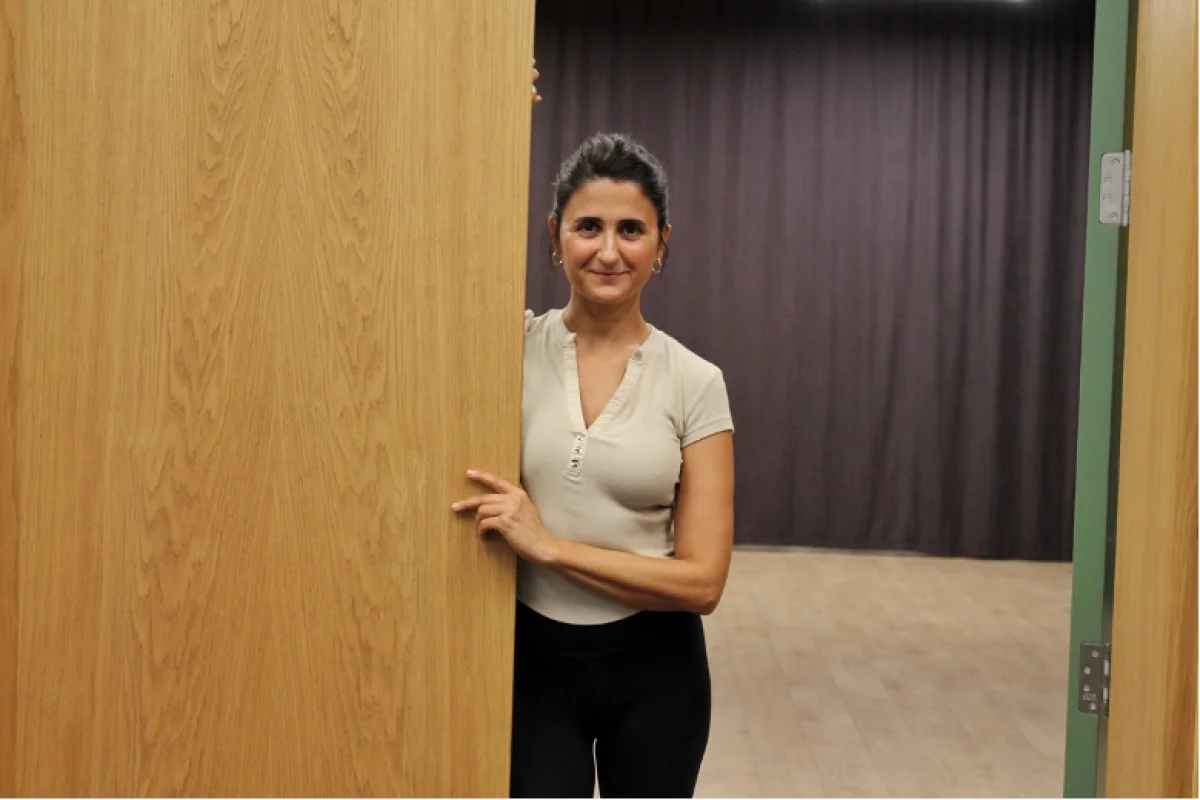
This interview emerged as a natural result of our paths crossing at Inspera. We wanted to share this encounter—which turned into a heartfelt conversation as we found common ground on the same artistic and spiritual plane—with you. Because the space Duygu creates goes beyond a mere physical practice; through her voice, breath, and words, she speaks to us in a language we’ve forgotten.
May these lines serve as a reflection of the sincere dialogue that took place between us—one that is open to all—and as a shared window into the transformative power of stillness and intuitive flow.
Duygu, let’s start by getting to know you a little better. Where did music and yoga find their place in your life, and how did they intertwine over time?
Yoga entered my life in 2010 through someone I met in London. After six years of studio practice, I completed my first teacher training, and for the past nine years, I’ve been teaching classes and continuing my education. Music, on the other hand, actually comes from my roots. My childhood was spent listening to the folk songs and ballads my mother played at home; they seeped into me, though I wasn’t aware of it at the time. I started writing in 2008, again in London—perhaps out of loneliness and the intensity of the emotions I was experiencing. Over time, my prose turned into poetry, and my poetry turned into songs. During this process, yoga and music progressed hand in hand; in 2016, not only was my first single, “Susan Hanım,” released, but I also completed my first teacher training and began teaching classes.
2016 was practically a turning point where music and yoga intersected in your life… So, how did these two disciplines reflect such harmony in your practice? In your work—which I’ve followed closely—whether it’s a song or a yoga practice, there’s a common frequency: calm yet deep, intuitive yet powerful. How do music and yoga intertwine for you? Could you tell us a bit about the connection you create between sound, breath, and the body?
At the core of both (music and yoga) lies the breath. The breath is like the heartbeat of life; the body is a bridge between matter and spirit. Where there is breath, there is sound; where there is sound, there is life—and every moment has its own music; this is even more evident in nature. The more you listen, the more music reveals itself—the key is to listen with your heart. The body, meanwhile, is a magnificent instrument; every gesture, every facial expression, every word, every inward thought, and every intention composes its own music. From this, I also understand that there is no separation in life; everything is fundamentally interconnected. We are a lifelong act of remembrance.
You say, “The body is a fine instrument”—it’s as if yoga offers a space where this instrument can slow down and hear its own sound. In your practice, too, slowness isn’t a state of stillness—it’s more like a transformation. Where do you think we find the depth of this practice? How would you describe the transformative effect of slowing down amid the pace of the day?
Silence is authentic, refined, and full of wisdom; slowing down opens the door to it. As we slow down, attention—and therefore awareness—increases; it’s like a sense of expansion from within. I’ve participated in meditation retreats for many years; I’ve spent days without speaking or making eye contact. These retreats played a major role in strengthening the bond I formed with silence, and it was inevitable that I would bring this aspect into my classes. We’re living in a time when we drift away from simplicity out of a desire to be liked, and when we believe we must always do more. Yet if we could express ourselves without the fear of not being accepted, we could reclaim our authentic selves. That is why I prioritize creating space for silence in my classes—to understand who I am and reconnect with that person in every way.
Those who join you in practice aren’t just doing yoga; they’re also stepping into a narrative: you enrich the experience with quotes from various books, words that touch the soul, and intuitive phrases that flow into the space in that moment. In fact, we feel this in your music as well—an intuitive flow, an emotional journey…
What guides you in the creative process? When does inspiration usually strike for you?
In the school of life, every form of existence is unique; there is an endless amount we can learn from one another. I believe the cycles of nature reveal a great deal about human self-discovery; nature is a mirror of existence. Observing these manifestations of existence without judgment lightens my inner burden; it allows me to pour out what’s inside me. My most recent song, for example, tells the life story of a leaf; through metaphors, I touch on the human journey of life.
Yes, your recently released song “Leaf” is actually a symbolic reflection of your world of meaning through its music and lyrics. It is precisely this deep understanding that resonates so well with the spirit of Inspera… At Inspera Art Academy, there is a space that is fully integrated with the energy of art. Here, the energy of both the space and the community creates a very different kind of depth.
How do you observe the impact of this atmosphere on the flow of the classes and the participants’ experience?
The silence in the studio where our classes take place is profound. As we progress through our practice, that silence envelops us all; those moments are priceless. Inspera, with every detail within it, was once the dream of its esteemed founders. Now we are here; this silence is the result of years of patience, hard work, and dedication. Sharing yoga in such a space is a great privilege.
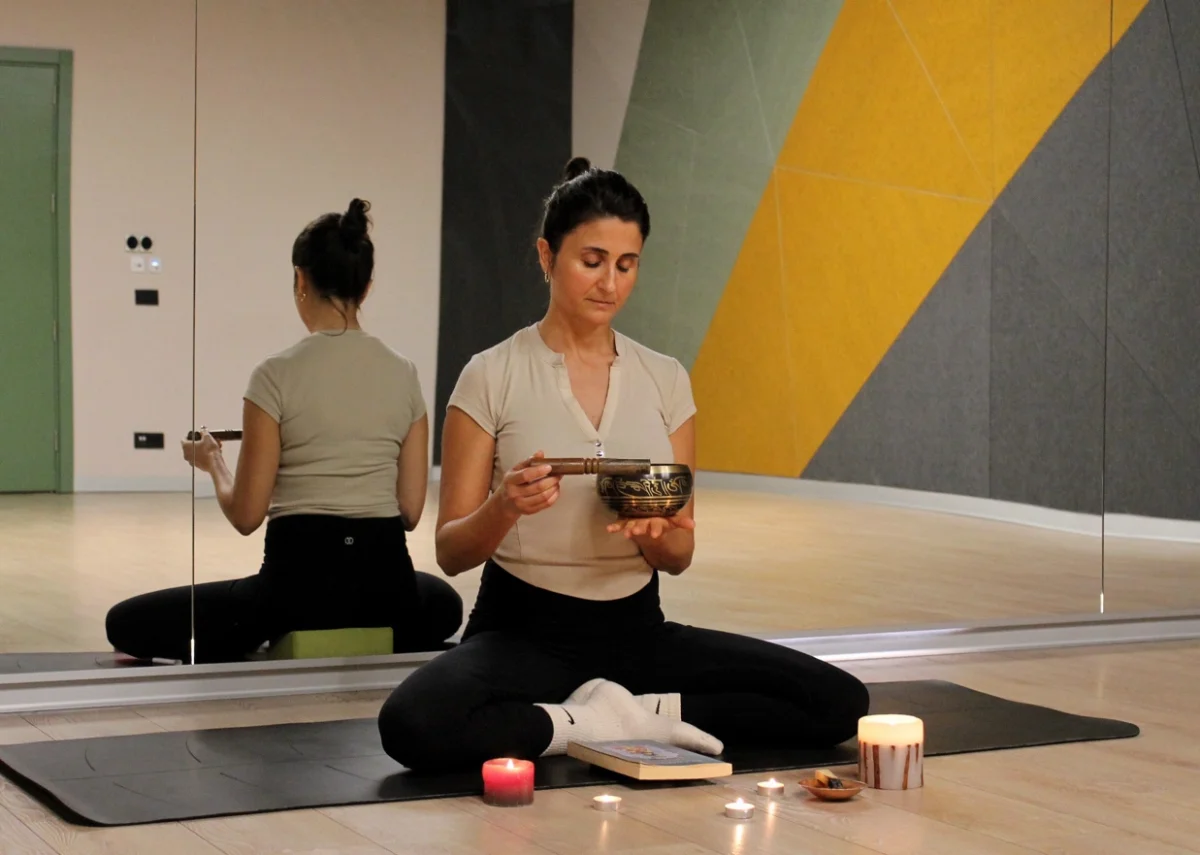
In this moment, as we feel the touch of that deep dedication at Inspera, let’s return to those moments that have transformed you the most on your inner journey. Yoga is a journey inward… Sometimes a breath, sometimes a pose, and sometimes just a moment of awareness transforms us.
Duygu, what was the moment of awareness that changed you the most on this journey?
Human beings forget the divine unity at their core… And then they set out on a journey to remember it—a journey that stretches from the question, “Who am I?” to the realization, “I am That.”
What I’ve been thinking about is this: for someone just embarking on this journey, what might they “hear” in that silence at the very first step, and what begins to “change”? Let’s say, during our practices at Inspera, we were to meet someone for the first time who doesn’t know you… How would you describe this practice to someone who has never experienced yoga?
What is heard, and what changes, within that silence, stillness, and turning inward?
Yoga, literally, means “unity.” This concept aligns with the Sufi realization of “wahdat al-wujud” (the unity of existence). An Alevi saying also goes: “The path is one, the ways are a thousand and one.” Human beings are beings who are both forgetful and remembering; both finite and infinite. Human beings are on a journey of remembrance—and I would say that yoga is one of the thousand and one paths of that journey. Yoga can lead to silence; silence, in turn, leads to remembrance.
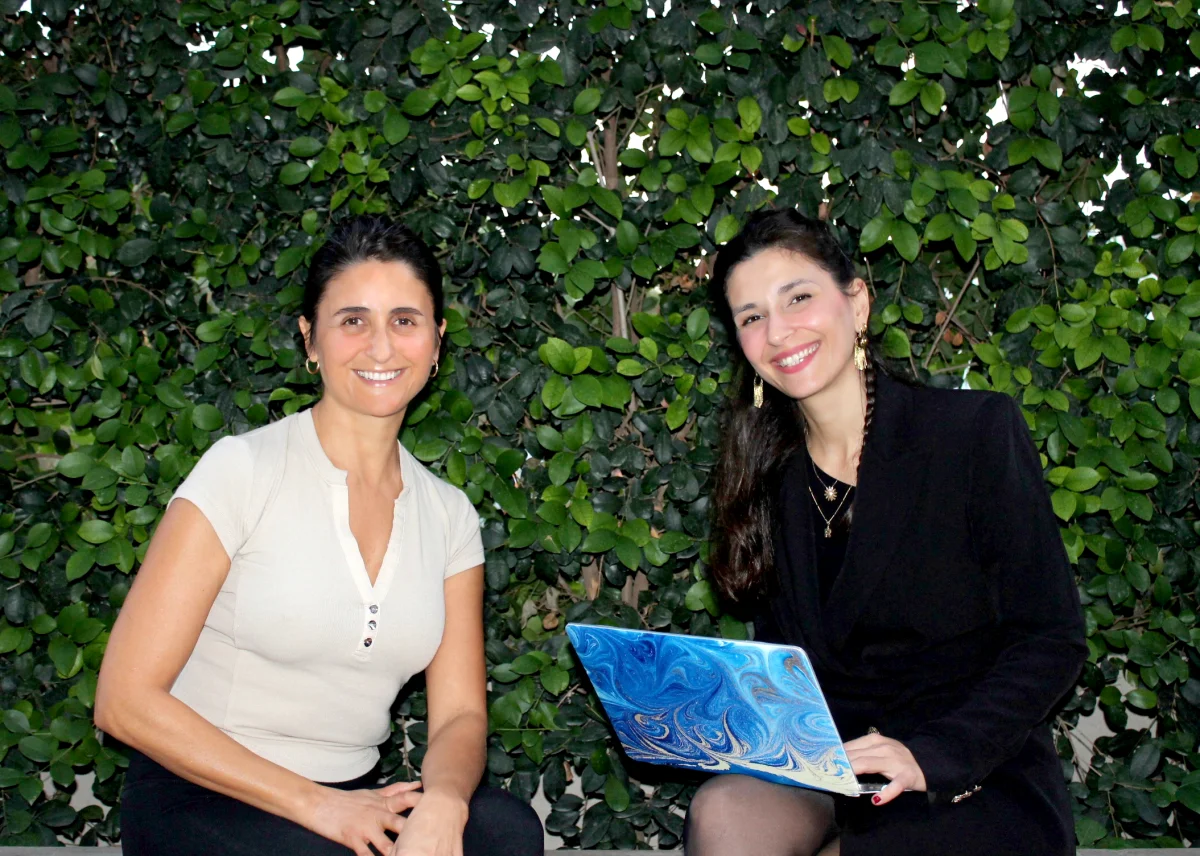
The journey of remembrance for humanity… It seems this very sentence forms the essence of our conversation. What remains is not questions and answers, but an invitation: to the boldest journey we can undertake—inward toward ourselves. In Duygu Özay’s music, her lyrics, and the serene yet profound space she creates, there is a mirror for all of us. And in that mirror, we realize once again that it is possible to see ourselves in our purest form, to remember, and ultimately, to “be.” The path is one, the journey is a thousand and one… And we continue to walk this path with the voice of silence. We invite you to join us on this silent walk and to hear the voice within yourself at Inspera…
Interview: Rümeysa Ertem