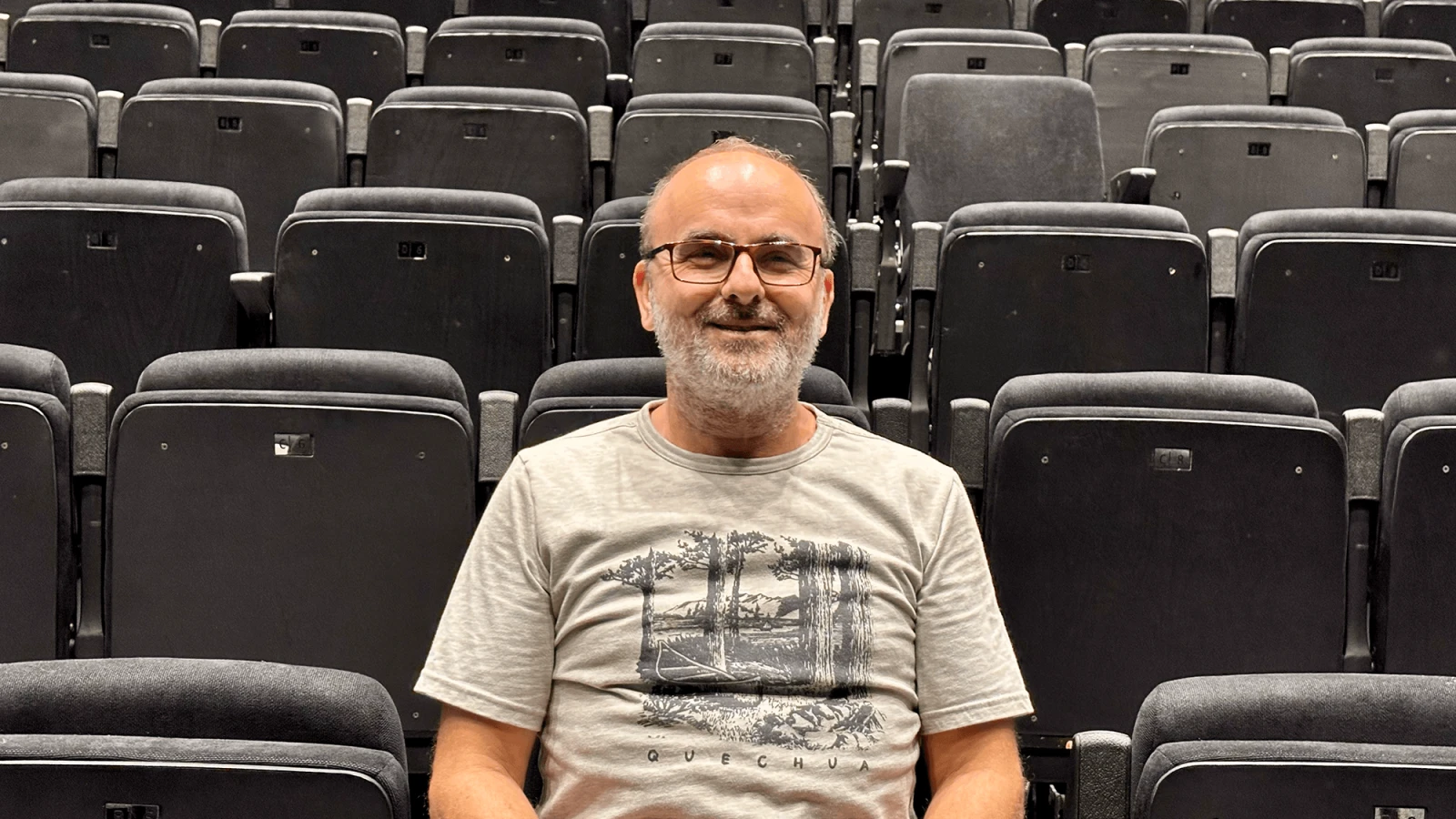
Our set designer, Tolunay Türköz, brings together different cultures on the same stage in the *Fairy Tale Atlas* project. In this magical atmosphere, where the tiniest details can create vast worlds, each play opens a new window onto children’s imaginations.
The "Masal Atlası" project reaches out to many corners of the world, bringing elements from different cultures to our stage. While working on this project, how did you develop the concept for a set design that would span the entire season?
"Fairy Tale Atlas" offers a cross-cultural journey. As I brought fairy tales from different regions and traditions to the stage, my priority was to reflect this diversity. However, I also strove to maintain visual consistency across the plays. When creating the design, I wanted to build a structure that was flexible and adaptable, yet always looked like the pages of the same atlas. This way, in every fairy tale, the stage looks familiar while also transforming into a new world. Ultimately, every culture finds its place on stage with its own unique texture.
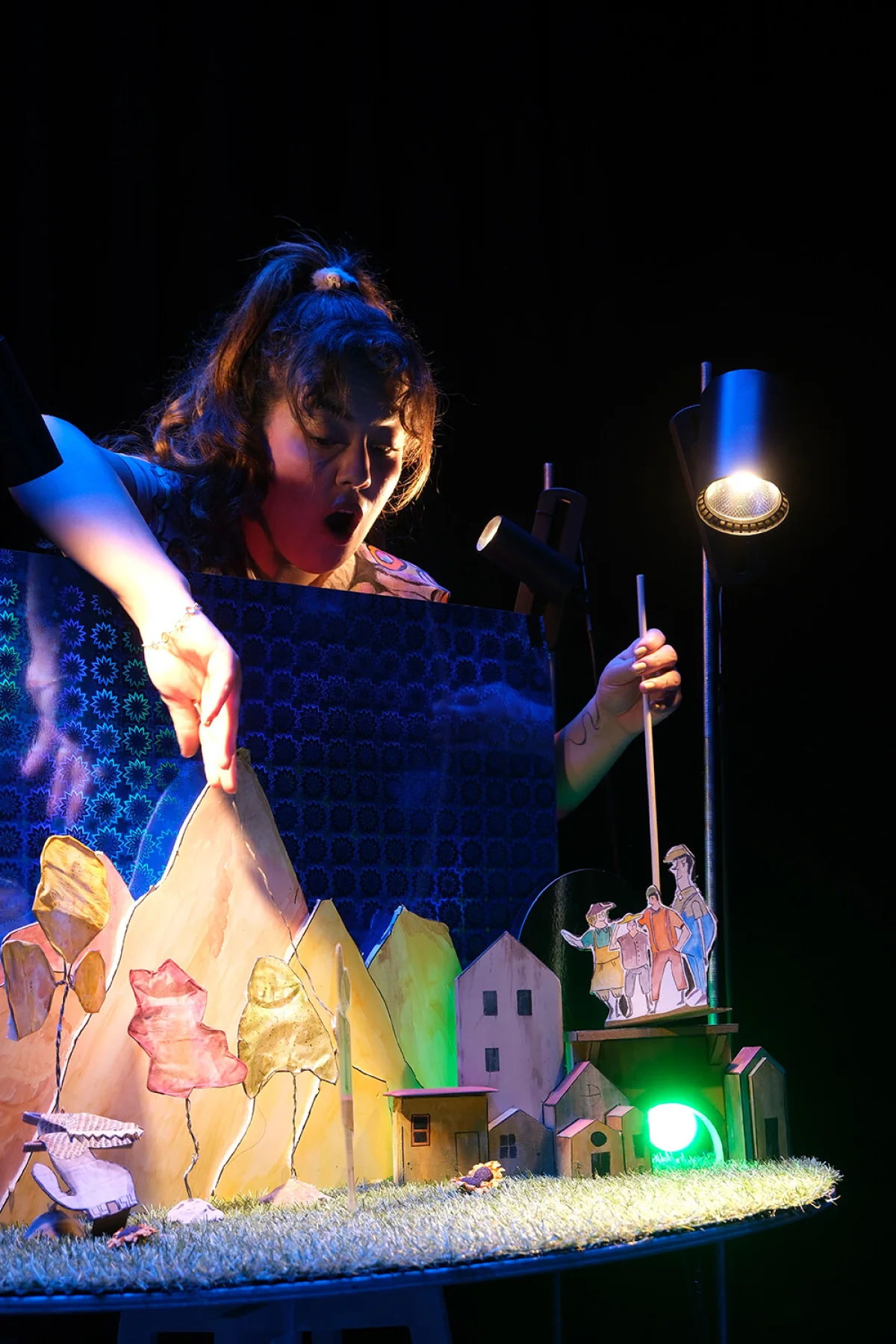
Actually, our set is smaller compared to our other plays; we have tiny props and puppets. However, the set design becomes our greatest ally when conveying the key moments of the fairy tale. How did you achieve this?
In design, “big” isn’t about physical dimensions—it’s about impact. Especially in children’s theater, sometimes a tiny object or detail can convey an entire world. Elements such as puppets, miniature structures, and transformable objects are among the most powerful tools for sparking children’s imaginations… Once they catch a hint, they can fill in the rest in their minds. That’s why we focus on placing the right symbols and associations on stage, rather than every single detail.
Our next play/story will be Gilgamesh. Can you give us a little hint about the design?
Gilgamesh speaks to today’s audience with the grandeur of a prehistoric era. As I approach the design process, I want to bring the stone textures of Ancient Mesopotamia, its mythological symbols, and its relationship with nature onto the stage. If I had to give a hint: This time, you can think of the stage as an “archaeological dig site.” A past that unfolds layer by layer, symbols emerging from beneath the earth, and a heroic tale racing against time...
Inspera Children’s Theater prioritizes not only presenting a play on stage but also creating a world of imagination. As a set designer, how do you define the role of set design in conveying this world of imagination to children?
Even before the play begins, young audience members step into that world—through colors, shapes, and light… And every design element encourages them to use their imagination. They’re already very open to using their imagination. Our job isn’t to guide them, but to make room for their imagination. That’s why, when designing, I work from a perspective that doesn’t underestimate their world—but rather takes it seriously.