From the Zero Point of History to the Stage
Ege Işık Özatay, the author of our new play *Journey to the Center of the World*, weaves together the magic of history, philosophy, and fairy tales in this play inspired by Göbeklitepe. He spoke with our theater’s director, Nevra Nergiz, about his sources of inspiration, his journey as a writer, and the nuances of speaking to children.
You mentioned that while writing this play, you were also watching the promotional videos for *Treasures of the Forest*, the first production by Inspera Children’s Theater, and that they left a deep impression on you. What were your feelings during that process?
In 2023, when I held my second son in my arms, I had begun rereading Aziz Nesin’s book *Today’s Children Are Wonderful*. This bedside book, which kept me company during those long nights with a newborn, describes adults through the eyes of children. Aziz Nesin’s distinctive sense of humor comes to life in this book through the letters exchanged between two children named Zeynep and Ahmet. In fact, it is through these letters that we come to understand just how egalitarian, free-spirited, sincere, and truthful children really are. The world of adults, on the other hand, is portrayed as chaotic. Self-serving, opportunistic, and status-obsessed parents; a repressive, rote-learning-based education system; and formulaic relationships clash with the children’s innocent thoughts. The children are fully aware of everything and have grown thoroughly tired of the adults’ sentences that begin with the phrase “in our day…” Early one morning, in a reality blurred with dreams, I looked at my son breathing quietly beside me. “A brand-new world is sprouting right beside me,” I thought. That same morning, I came across an Instagram post shared by my friend Serel Turhan from the Department of Performing Arts at Dokuz Eylül University’s Faculty of Fine Arts. A magical atmosphere, lights, beautiful costumes crafted with the precision of precious gemstones, and a vibrant energy radiating from the stage to the audience... My friend Serel, who dazzled everyone with her talent when she first took the stage at the Özdemir Nutku Theater while still a theater student, had added the note “Treasures of the Forest, Written by Nevra Nergiz, Inspera Children’s Theater” beneath this post. I did nothing more than send Serel a congratulatory message. I couldn’t have done anything else. Because I didn’t have a children’s play in my repertoire. What kept swirling in my mind were dialogues and characters suspended in the air. I had to put them down on paper.
So, how did you first sit down to write the script?
This play—which premiered in Bodrum at Inspera and was adapted for the stage from a children’s book—felt like a mental gift bestowed upon me in 2023. I felt I had found a place for myself within the universe you created. Surrounded by olive trees on either side, pine trees, pinecones scattered on the ground, mountain thyme, and tiny puddles of water, I felt as though I’d set out on a mysterious walk with Yeraz. Then I began reading this book to my sons. Like any mother, I waited for time to pass. My son first took his first steps, then said his first word, and finally held a spoon. I knew the time had come. The day I sat down at the computer was a turning point for me. I was going to write a journey story for the Inspera Children’s Theater. I wanted to create a brave, fun, sincere, mind-expanding, and magical or fairy-tale-like universe that would speak directly to them. I set out to answer the question: “How can I turn the world built by adults upside down?”
*Journey to the Center of the World* focuses on very innocent, very sweet friendships while also inviting the audience on a mystical journey in the background. Drawing on many fields—such as history, philosophy, and sociology—it opens up an exciting new world for the audience. What I’m most curious about is this: What motivated you to center the story around Göbekli Tepe?
As I sat in front of my computer screen staring at a blank Word document, one sentence kept running through my mind: “I want to create a fairy-tale-like universe.” It was very important to me that this universe belong to our own culture. I began to circle around the center of the world. In his 1867 novel *Voyage au centre de la Terre* (*Journey to the Center of the Earth*), Jules Verne descended to the center of the Earth through the crater of the extinct volcano Snæfells in Iceland. As the characters in the novel embarked on a journey full of surprises beneath the earth’s surface, I began to explore the center of the Earth. As I searched for answers to questions like “Where is the zero point of history? Where is the starting point?” the clues pointed to Göbeklitepe. Described as the oldest known temple complex, Göbeklitepe is dated to around 9600–9500 BCE. That means it’s about 6,000 years older than Stonehenge and 7,000 years older than the Egyptian pyramids. I specifically use the word “ancient” because this place is like a living organism. There are so many details that could even capture a child’s interest. The reliefs of animals—such as snakes, foxes, scorpions, lions, and birds—carved into the standing stones; its great “age”; the massive stones ranging from 5 to 7 meters in height; the sense of treasure and mystery; the legends, riddles, and excavation sites… I’ve started reading Karl W. Luckert’s research book titled “Göbekli Tepe.” I found myself in the middle of an oasis. In addition to thoroughly explaining the meanings of the symbols found at Göbekli Tepe, Luckert places a study of human history right into the reader’s hands. I watched videos by Klaus Schmidt, the German archaeologist leading the excavations at Göbekli Tepe. I thought it was time to tell the children a story about a journey to a new center. And this time, guided by knowledge, we would reach the true center: Göbekli Tepe.
This question might be a bit technical, but I’m sure it’s also of interest to those who think deeply about playwriting and children’s literature. What do you pay attention to when writing for children, and specifically in this play, how did you strike a balance in conveying the historical, cultural, and mystical aspects of Göbeklitepe?
When writing for children, my priority is to simplify the complexity of the subject while nurturing their sense of curiosity and imagination. I pay attention to ensuring the language is understandable, the rhythm is fluid, and the relationships between characters are emotionally engaging. Focusing on “Göbeklitepe,” I crafted the story to highlight its mystical and magical aspects without altering the historical and cultural facts; I tried to balance this with stories, symbols, and small dramatic surprises that spark children’s curiosity. This way, they both learn and enjoy a delightful journey through the world of play.
We do children’s theater, but we say, “Adults are welcome to join us” at our shows. I think this play fits perfectly into our repertoire. As the play’s writer, how would you convince an adult to come see it?
I’d say this to them: “Would you like to go back to a day from your childhood—even just for a moment—and go on a train ride with your friends? If your answer is ‘yes,’ then let’s go to Inspera Bodrum.”
What’s your favorite scene in the play?
I really love being at airports, harbors, train stations, and even those bustling bus terminals. Passengers, their loved ones coming to see them off, suitcases—stories of people moving around and on the go have always fascinated me. Amid that chaos, I hear drums, maracas, trumpets, and saxophones playing in my ears. I always wonder what book that young man is carrying in his bag, or who that cheerful girl with her hair braided on both sides is so eager to meet. I’m more drawn to the excitement of the journey itself than to the destination. That’s why I worked so hard on the play’s opening scene. It’s a train station—the place where you’ll first meet my characters. I wanted to draw the audience right into the play from the very start.
So, who’s your favorite character?
My favorite character is the train itself. This adventure train—which embraces Zeyno, Sümer, Güneş, Abbas Atlas, and all the Göbeklitepe symbols—feels alive to me. I can compare this situation to the character Snout in Shakespeare’s *A Midsummer Night’s Dream*, who brings a wall to life. Snout spreads his fingers to take on the role of “the crack in the wall.” The lovers speak through this gap. This situation strikes the audience as both comical—because a full-grown person is seriously acting out “I am the wall”—and serves as a playful nod to Shakespeare’s take on theater: On stage, everything is a play and exists through the power of imagination.
I saved introducing you in detail for last, Ege, because I’m so excited about the play. But of course, we’d also like to introduce you to our audience and readers…
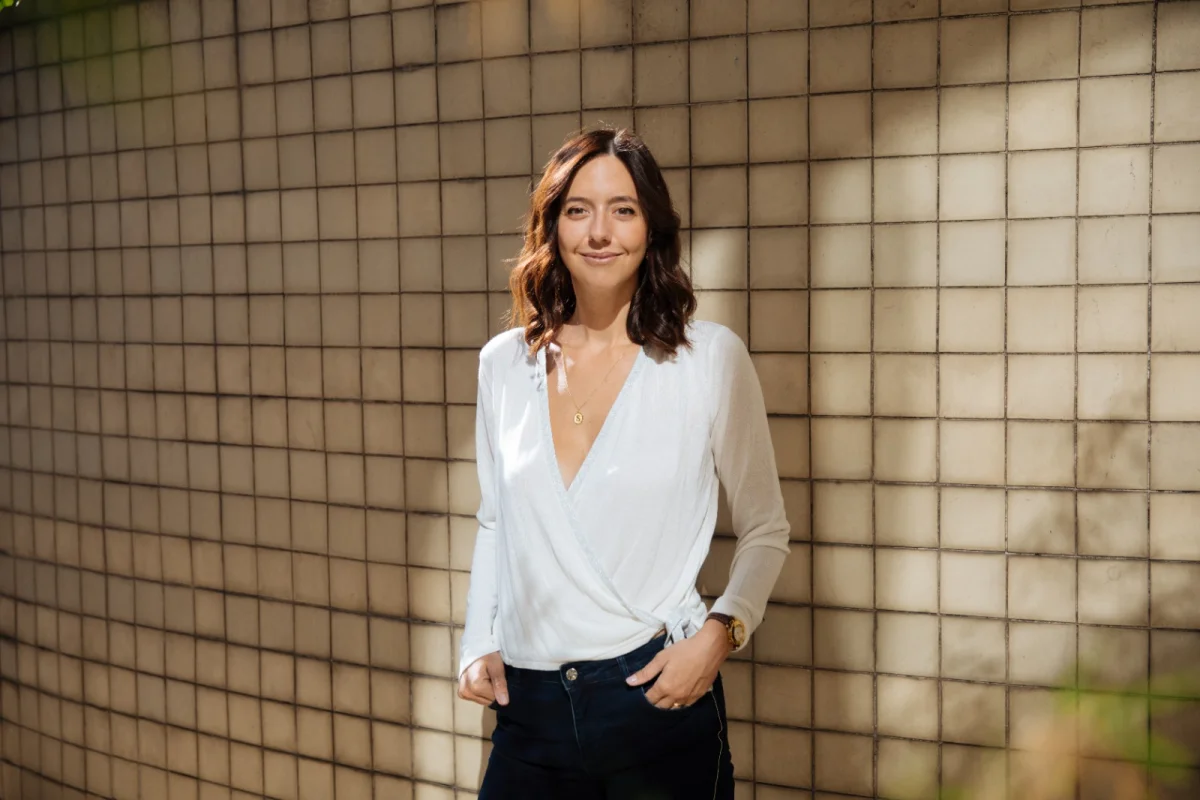
I’m Ege. I’ve been living in Berlin for over a year with my two sons, Sümer and Pamir, and my wife, Evrim. I write short stories and art essays for adults. My children’s play, *The Kitchen of Wonders*, was previously staged at the State Theaters. During the fifteen years I lived in Istanbul, I worked as a copywriter at both traditional and digital advertising agencies. I continue to write every day.
And my main question: What emotion do you think the audience will take away from this story?
I hope our audience leaves the theater with a sense of curiosity after the curtain falls. I would be delighted if I could plant some questions in their minds that they’ll want to seek answers to. Of course, I hope they have a lot of fun, enjoy themselves, and—for just a moment—escape the world to savor the universe we’ve created together with Inspera Children’s Theater.