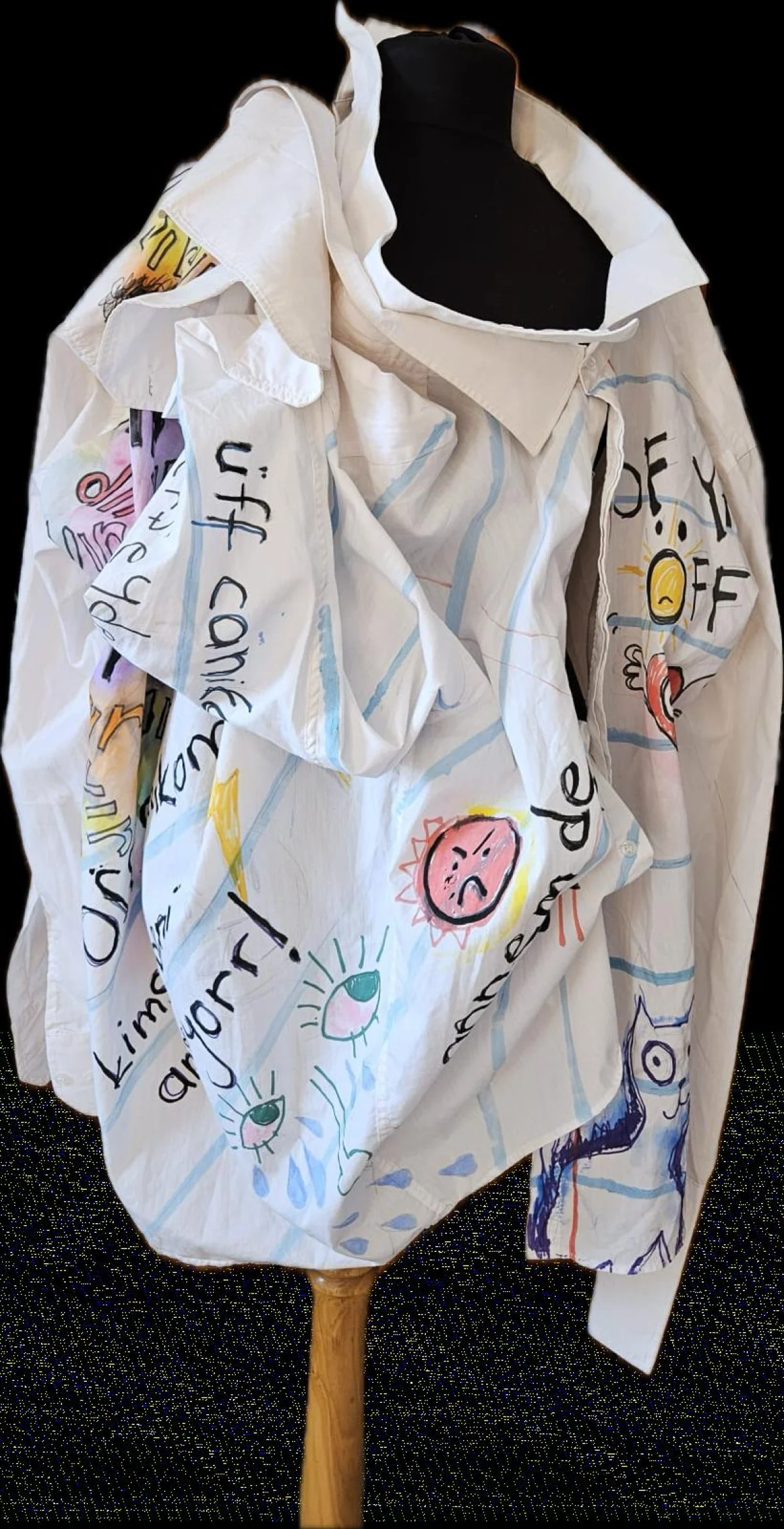
We wondered who could best describe the character “Caniko,” who left an indelible mark on *Treasures of the Forest*, the first exciting production by Inspera Children’s Theater. No one else came to mind but our dramaturg and the actress who brings Caniko to life on stage, Yağmur Şenbayrak! So, welcome to Caniko’s adventure, as told by Yağmur…
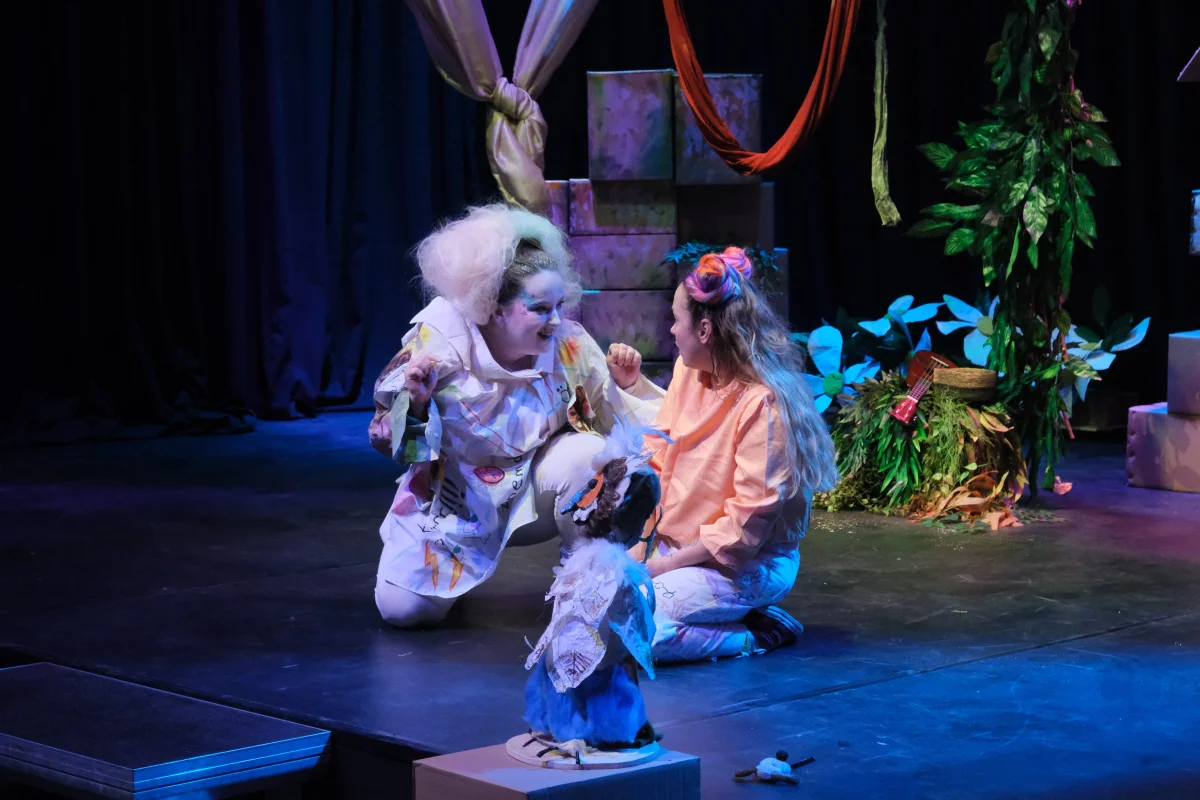
When Caniko was just one day old, Nevra Nergiz—the author of our play and the original story—and our director, Serel Çapacı Turhan, were already dreaming of turning the book *Treasures of the Forest* into a play. That’s exactly when my path crossed with Serel and Nevra’s, and Caniko’s journey began. First, I read the book and got really excited. Then, together, we began to evaluate the formal differences between the story and the play’s script, as well as the action elements needed for staging. We worked to transform the story into a structure filled with action, driven by movement, and enjoyable to watch.
During this process, we moved closer to a post-dramatic theater approach and didn’t feel compelled to establish a clear cause-and-effect relationship. This approach took the entire adventure to a whole new level because, based on Serel’s idea, we decided to bring Caniko—who in the story was merely a diary consisting of pages—to life. This idea required deviating from the original story, and that could have been a bit risky. Unlike many writers, Nevra was quite eager and open-minded about this. This significantly expanded my scope of work as a dramaturg.
After thinking about the forms, the original text, and the plot for a while, we decided to create a text structure that would include interdisciplinary elements to enhance the viewing experience. Unlike the original story, we began moving toward a fantastical structure. The main question was: “How will Caniko come to life?”
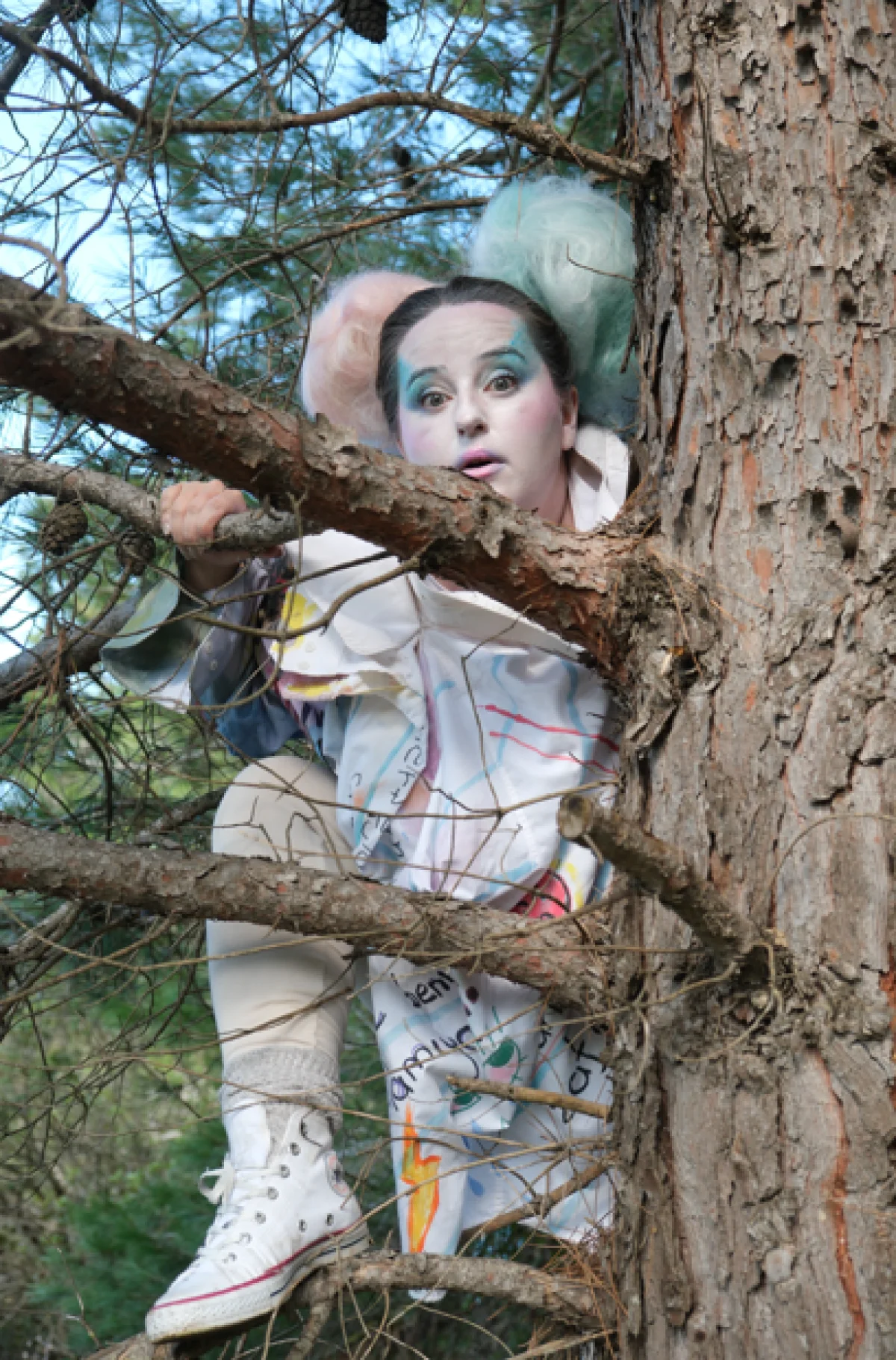
How Does a Diary Come to Life?
Or if it comes to life, what does it become, and what does it think? In light of such questions, Caniko’s character gradually began to emerge. A bit of grumpiness, a touch of arrogance, plenty of mischief, and a pinch of wisdom were added. And here he is: Caniko, the character! Having lived for years as a notebook, Caniko had taken on a lively, outgoing personality, as if to make up for the pain of the passive life he had led for so long. He was both an obstacle and a savior to our main character, Yeraz, in terms of his inner world and perhaps his ability to do what he couldn’t do before—to take action. In fact, he was a reflection of Yeraz—another side of himself. “So, how do we bring a character like Caniko to life on stage?” That’s another question that arose. We thought long and hard to find a solution. First, the idea of making Caniko a puppet came up. However, we didn’t dwell on this idea for long because we felt that bringing such a dynamic and fluid character to life with a puppet would be too superficial.
“What about a body puppet?” This idea piqued our interest much more. We immediately began our research: While considering what could be done regarding the construction and application of body puppets, we held several meetings. However, we realized it wouldn’t be possible to achieve the compelling result we desired with this method. We also felt that stylistically, it wouldn’t fully capture the impact we envisioned for our play. And as we neared a conclusion, we said, “Caniko must be played by a human—he must be a living, breathing character!” The task of bringing Caniko to life on stage fell to me. When I began my acting preparations for Caniko, I felt the excitement of playing such a fantastical character—one that transforms from an object into a living being—for the first time. Fortunately, I had been quite familiar with Caniko since his birth; this gave me a significant advantage during the acting process.
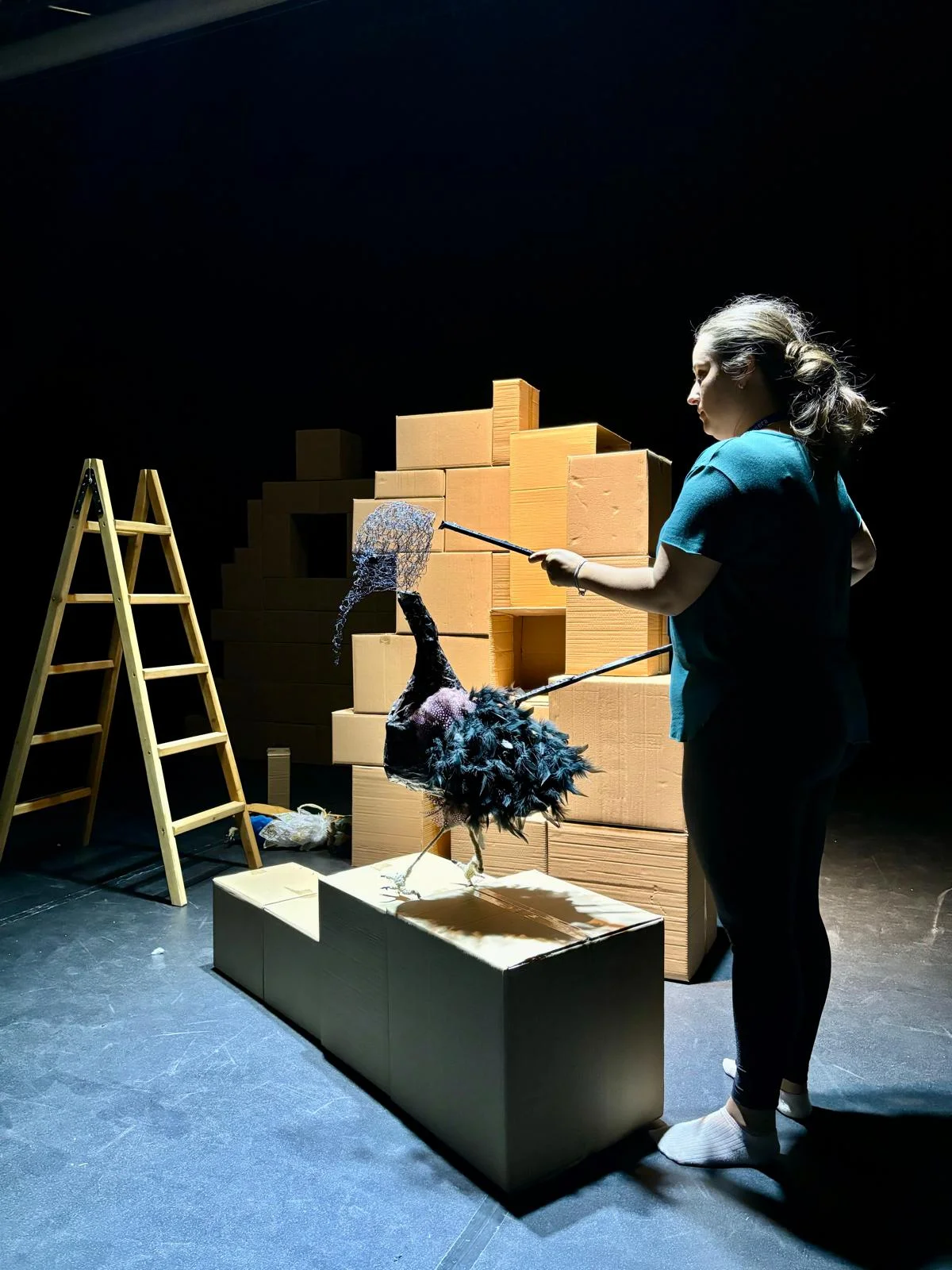

How I Prepared for Caniko...
Caniko reminded me of Puck from W. Shakespeare’s *A Midsummer Night’s Dream* and Ariel from *The Tempest*. Perhaps he also brought to mind the Witches from *Macbeth*. He also reminded me of the Cat, the Hatter, the Rabbit, and the Caterpillar from Lewis Carroll’s novel *Alice’s Adventures in Wonderland*. I had quite a few characters and sources of inspiration at my disposal. However, when I thought about what kind of movement an object would require to come to life, my mind got a little confused again. At this point, Serel, who had been by my side throughout the entire process, came to my aid once more. Of course, the support of my fellow cast members was also invaluable. When I first tried out Caniko on stage, to be honest, I realized I had turned into Gollum rather than Caniko. I had transformed into a strange, amorphous figure, and it was a rather unsettling sight. So we began studying J. Lecoq and physical theater techniques. We reviewed research and theses in this field and practiced extensively. The idea of coming to life as a notebook began to slowly take shape in my mind. Thus, air definitely became my most fundamental element of movement. After all this work, I felt the need to return to Stanislavski and wrote a backstory for Caniko: “Who is Caniko? What is he? From what soil did he grow, and what kind of tree was he made from? What is the magical power that allows him to come to life, and where does it come from? How did it come into Yeraz’s possession?” I found answers to many such questions in my own mind. I shared these answers with our director, Serel, and our writer, Nevra, and we discussed whether our explorations aligned with the answers I had provided.
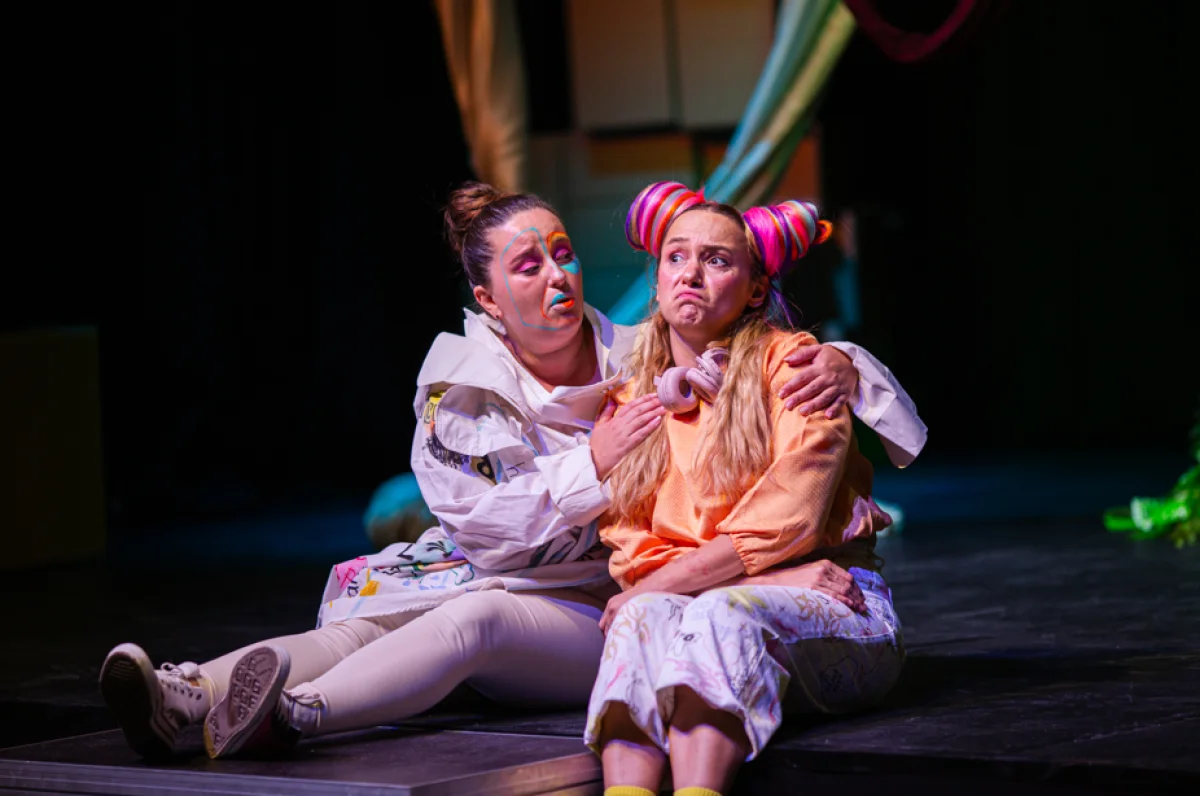
As a dramaturg and actor, I had never engaged so closely with children’s literature in my projects up to this point. This is another way that *The Treasures of the Forest* has enriched me. The depth and wisdom of children’s literature offer people entirely new perspectives on life. Caniko taught me many things, but without a doubt, the most important lesson was to take action and keep going without getting bogged down by negativity. He reminded me to accept life as it is—instead of “grumbling, huffing, and wailing”—and that while pain is inevitable, suffering is a choice. Thank you, Caniko…